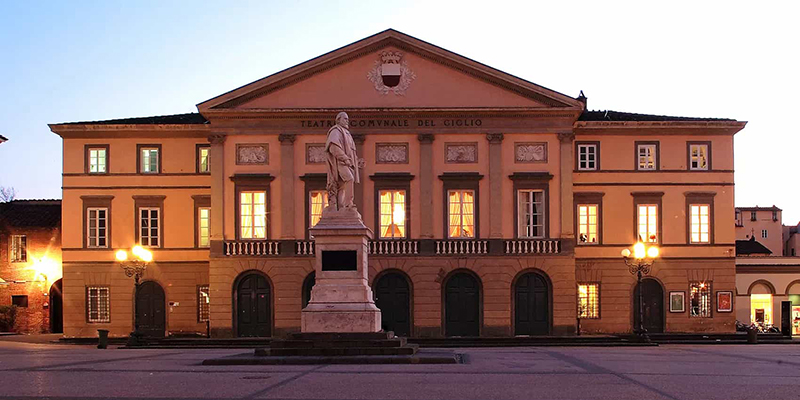
The return of the Orchestra della Toscana to the stage of the Teatro del Giglio: a fresh encounter between great music and one of Lucca’s most iconic venues, where tradition is revitalised and sound once again fills a space steeped in history, celebrating The Lily of Lucca.
When you think of Lucca, the city walls, bicycles and perhaps Giacomo Puccini probably spring to mind. Then, almost inevitably, there is the Teatro del Giglio Giacomo Puccini. A name that sounds delicate, but which in reality carries the weight of more than three centuries of history, fires, rebirths and a touch of modern controversy – which never goes amiss.
A public theatre, truly
It is not just a ‘historic’ theatre. It is one of the oldest public theatres in Italy still operating in the same building. It was founded in 1675 as the Teatro Pubblico, built at the behest of the Republic of Lucca at a time when theatre was still the preserve of noble palaces. Here, however, a space was opened up for the city.
Then came what often happens to living things: in 1688, a fire destroyed it completely. The end? Not a chance. By 1692 it had already been rebuilt, richer, more ornate, and ready to reclaim the stage.
From the “Pubblico” to the “Giglio”
The name only came into use in the 19th century, when Lucca came under Bourbon rule. Three lilies in the coat of arms, a name decided: Teatro del Giglio. Simple, symbolic, and destined to endure.
In 1819, the theatre was rebuilt in the form which, with modifications and scars, has survived to this day. From there began the golden age: opera, great performers, a city that identified with its theatre.
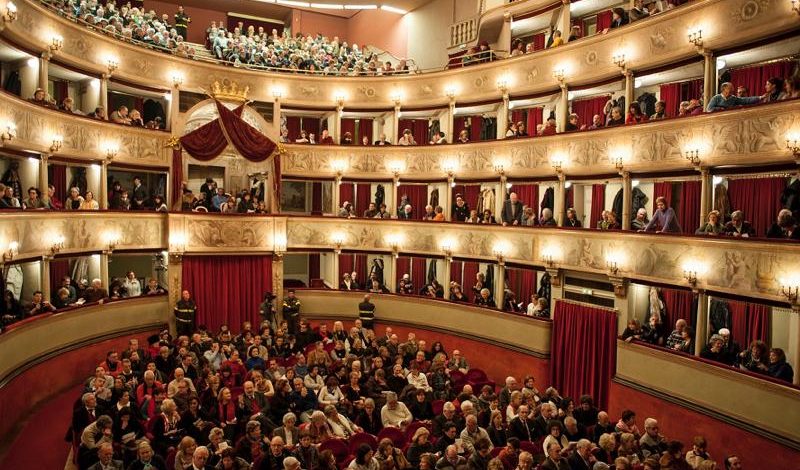
Half the (musical) world has passed through here
The stage of the Giglio has hosted names that are now enshrined in the history books: Gioachino Rossini, conducted no less than by Niccolò Paganini, Maria Malibran, Gilbert Duprez.
And then there was him, inevitably: Giacomo Puccini. This is where he trained, where he accompanied on the piano as a student, and where he brought his operas. Edgar, La bohème, Tosca, Madama Butterfly: all have graced this stage, often with the composer present to oversee every detail. Not exactly someone who ‘let things run their course’.
In 2024, a hundred years after his death, the theatre officially added his name. A decision that sparked debate, because in Italy even changing a plaque can become a philosophical issue. But the connection had been there for some time, etched in history rather than in letters.
A theatre that changes
The 20th century was not kind to the Giglio. Wars, misuse, questionable restorations. In 1957, work to increase seating capacity significantly altered the original structure. In short: more seats, less identity. It happens.
Yet the theatre survived. In 1983 it was made safe, and in 1985 it was recognised as a “Traditional Theatre”. This is not a medal to be displayed, but a responsibility: to continue fostering culture in a serious manner.
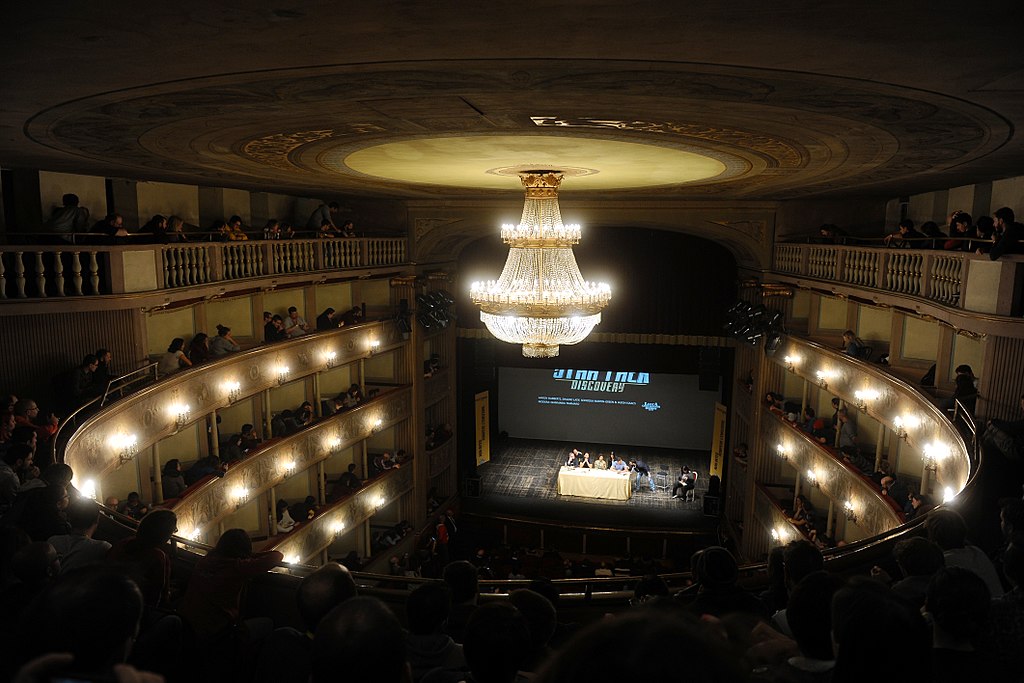
Today: alive, not a museum piece
Today, the Teatro del Giglio Giacomo Puccini is not a monument to be viewed in silence. It is a functioning venue: opera, drama, dance, concerts, training, and projects with schools.
It collaborates with the Puccini Study Centre, hosts the Compagnia del Teatro del Carretto, and maintains a library and video archive documenting decades of performances. And in 2024, restoration work began to bring the façade’s original colour back to life. Every now and then, we return to our roots, without nostalgia, but with a touch of respect.
Why it still matters
The point is this: the Giglio is not just an ancient theatre. It is a theatre that has never truly ceased to be used. And in a country full of static beauty, that is already something rare.
Here, history is not locked away in a display case. It comes to life every time the curtain rises.
In this setting, rich in memory and vitality, on Saturday 21 March at 9.00 pm, the stage of the Teatro del Giglio will welcome the Orchestra della Toscana with Emmanuel Tjeknavorian and cellist Jeremias Fliedl: On the programme: Sibelius’s haunting Death of Mélisande, Haydn’s Concerto No. 2 and Beethoven’s luminous Symphony No. 4. A unique opportunity to experience great music in a historic theatre.
Indirizzo: Piazza del Giglio, 13/15, 55100 Lucca LU
Telefono: 0583 46531